What is purple teaming? Key benefits and how it works

What is purple teaming

Threat actors are getting smarter, and traditional red-blue team silos leave blind spots. Purple teaming bridges the gap by offering a more integrated approach, combining offensive expertise with defensive implementation to create a more comprehensive security strategy. Purple teaming isn’t just a technical exercise; it’s a strategic investment in your security posture. When done correctly, it delivers many benefits across detection, collaboration, and culture.

Beyond the terminology, what does purple teaming actually look like in practice, and how can it transform your security operations from reactive measures to proactive protection?

Blending of red and blue

Red teams focus on the offensive side, simulating real-world attackers. Their role is to imitate how a threat actor might breach defenses, achieve specific objectives, and often remain concealed.

In contrast, blue teams are defensive. They monitor threats, respond to incidents, and work to protect the organization’s systems and data.

Purple teaming integrates these two perspectives, yet not everyone interprets it similarly. For some, it is merely a red team exercise followed by a review: the red team attacks while the blue team attempts to detect them. If the defenders manage to identify something, the assumption is that purple teaming has occurred.

A collaborative approach

At its best, purple teaming isn’t just a sequence of tasks, but a focused, hands-on collaboration. Instead of separate teams reviewing each other’s work, think of it as an ongoing dialogue where defenders and attackers team up to strengthen your security from all angles.

Our team values collaborative, in-depth discussions. This can involve sitting side by side with team members, guiding them through tactics step by step. Whether you’re connecting over Teams or sitting around the same table, the goal stays the same: open collaboration and learning together.

The goal isn’t just to see if the blue team can detect the red team. It’s to strengthen detection capabilities, refine understanding, and close the loop between offence and defence.

Key benefits of going purple

  • Enhanced detection capabilities: One of the most immediate gains is the enhancement of detection mechanisms. Since the red team is sharing precisely what they’re doing and when, the blue team can correlate activities with real-time alerts, logs, and monitoring data. This insight helps tune detection rules and signatures, identify blind spots in monitoring systems, and understand which attacks fly under the radar and why. Purple teaming helps blue teams to recognize issues in real time and facilitate improvements accordingly.

  • Faster feedback loops: Traditional red team exercises can take weeks or months, and it may take even longer for blue teams to receive detailed feedback. Purple teaming dramatically shortens this cycle. With both teams working in sync, feedback is continuous and iterative. If something isn’t detected, changes can be made on the spot. Success can be analyzed and documented immediately. This facilitates faster refinement of tools, tactics, and procedures, making the overall security function more agile and responsive.

  • Realistic, high-fidelity simulations: Purple teaming often emulates specific threat actors or attack chains, unlike abstract tabletop exercises or isolated penetration tests. These are not random attacks; they are deliberate, structured scenarios based on real-world threats, including the tactics, techniques, and procedures (TTPs) employed by nation-state or advanced persistent threat (APT) groups. This realism is crucial as it ensures your defenses are tested against adversaries’ actual techniques, not merely theoretical ones.

  • Enhanced collaboration between teams: Purple teaming promotes a significant cultural shift. Red and blue teams, which often function in isolation or even in competition, come together. This collaboration fosters trust, empathy, and shared understanding. Red team members develop an understanding of the pressures and limitations faced by defenders. Blue team members gain insights into the mindsets and strategies of attackers. This mutual visibility fosters improved communication and enhances teamwork, which can extend into daily operations beyond the exercise.

  • Clarity over ambiguity: By discussing everything openly and frequently in real time, there is significantly less ambiguity regarding what occurred, what was observed, and what was effective. This clarity helps to identify meaningful improvements and prevent the finger-pointing or vague conclusions that sometimes accompany traditional testing.

  • Stronger security culture: Ultimately, purple teaming fosters a mindset of continuous improvement. It promotes curiosity, transparency, and a collective sense of purpose. Instead of focusing solely on scoring points or outsmarting the other team, everyone collaborates to enhance the organization’s security. This cultural shift can be as significant as any technical fix, laying the groundwork for a more mature and resilient security organization.

Purple teaming isn’t a fixed methodology; it’s a mindset that encourages transparency, learning, and constant improvement. While different organizations may interpret it uniquely, the approach’s core lies in collaboration.

As threats evolve, breaking down barriers between red and blue teams could provide the edge your organization needs.

Purple Teaming

Purple Teaming

Read more

Related content

Whitepapers

Purple teams with wings – Measuring detection efficacy in the cloud

June 1, 2024
Purple teams with wings – Measuring detection efficacy in the cloud
Our thinking

Application-level purple teaming

October 1, 2022
Application-level purple teaming
Webinars

Webinar: Redefining offensive security – The evolution of red teaming and beyond

March 31, 2025
Webinar: Redefining offensive security – The evolution of red teaming and beyond

How to run successful Kubernetes attack simulations?

Learn how to run successful Kubernetes attack simulations with this straightforward guide.

Why run Kubernetes attack simulations?

Imagine a newly created Kubernetes cluster, exposed on the Internet. According to a 2023 threat report, it takes only 22 minutes before it starts receiving attacks. This statistic emphasizes that it’s not a matter of “if” but of “when”, someone will target your cluster.  

Attack simulation exercises allow organizations to take a proactive stance by simulating real-world threats to identify vulnerabilities, detect malicious activities, and work towards building a resilient defense.  

These “purple team” exercises are not just about finding gaps. They’re an essential tool for security and operations teams to better understand real-world threats, as well as their own capabilities. 

Step 0: Threat Modelling 

Before carrying out an attack simulation against any target, it is essential that the threats posed against it are understood well. Kubernetes environments are no different, where the first step involves answering critical questions like:

  • What are the assets that need to be protected?
  • Where could attacks originate from?
  • What would motivate attackers to target a Kubernetes cluster?

Let’s start with the attack surfaces. From an offensive security perspective, this will also help us identify the levels we must execute in, in order to simulate these attacks. 

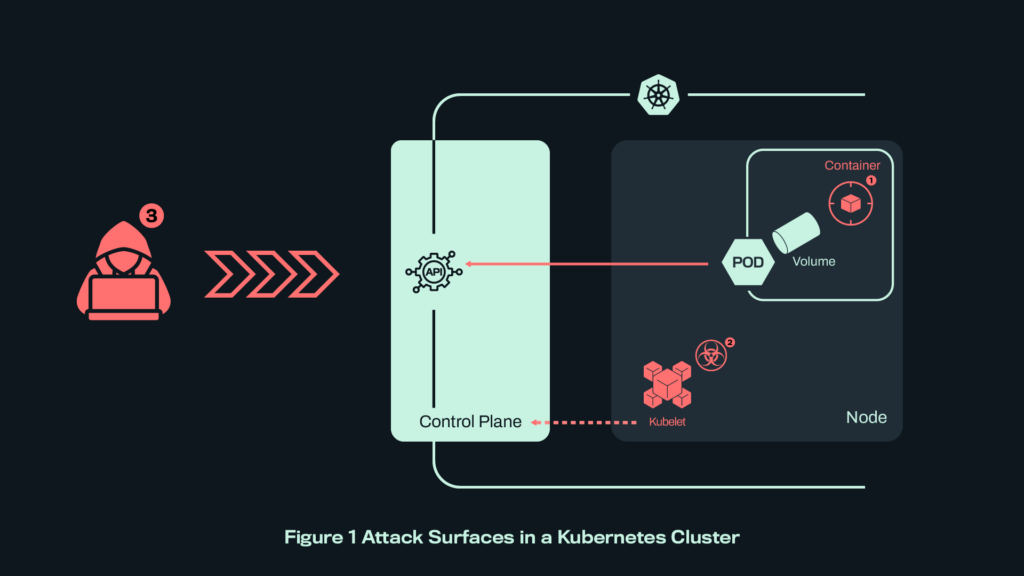
The most common entry point for attackers is at the container level—where the application code runs, within pods. For example, think of a compromised web server or a backdoored image that found its way into the cluster. If the pod has access to a service account, the attacker may interact with the Kubernetes control plane, potentially expanding their reach. 

Should they manage to break out of the pod, they gain access to the underlying node. From there, they could attempt to impersonate core components like the kubelet, which would effectively elevate their privileges. They could also try to access other Kubernetes resources running on the same node that maybe in a different namespace that was not previously accessible.

Attacks can also originate from external sources, such as the Internet, or any network the control plane listens to. Think of scenarios like leaked or stolen credentials, a compromised service, a malicious or coerced user and so on… 

Attack surfaces in a Kubernetes cluster

Incentives of the Kubernetes attacker

Once a threat actor is inside the cluster, their end goals may vary. An obvious objective is the workloads – the applications running on Kubernetes – with an intention to access sensitive data, modify proprietary software, or perform supply chain attacks

However, in many cases, the target is more direct: money.  In the age of cryptocurrency, computer resources are a target in itself, due to its immediate potential for financial returns. And Kubernetes nodes are not immune to this pattern.

Finally, Kubernetes clusters –especially those deployed in cloud environments– present another attack opportunity: Instead of targeting applications, attackers might try to breach the overarching infrastructure –whether cloud or on-premises– and get a foothold into this other realm. 

Kubernetes is also a less-monitored platform compared to traditional on-premise and Windows estates, which makes it an ideal place for attackers to establish persistence and hide their activities, allowing for long-term, undetected operations.  

Step 1: Execution of a Kubernetes attack simulation

Once the threats to the particular environment in question are understood, one can proceed to carry out the actual simulation. Let’s assume there are two main approaches to go about this – depending on what the end goal is:

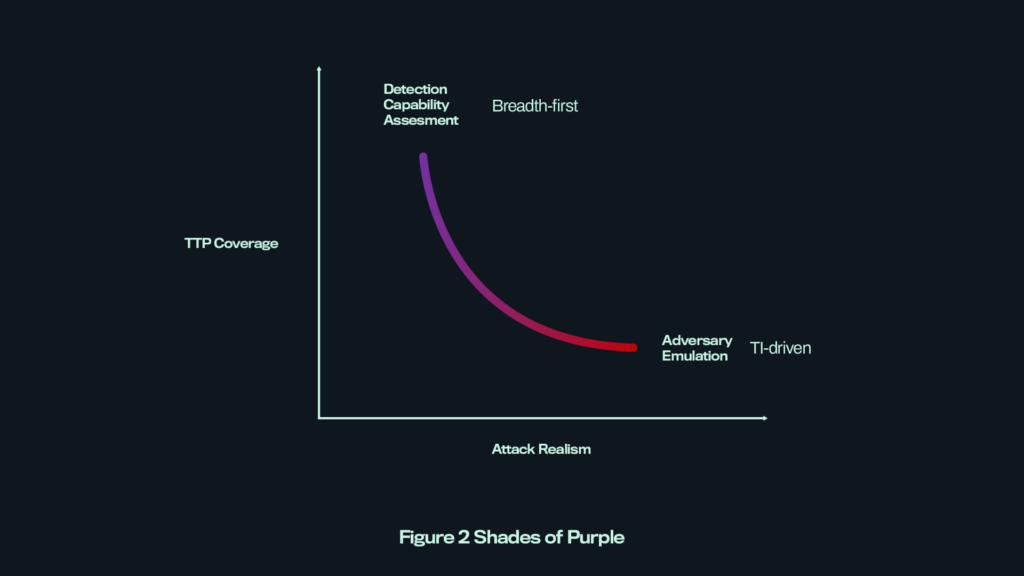
  1. Objective-based adversary emulation involves replicating the exact attack chains of real-world threat actors, with specific goals (e.g., data theft). Threat intelligence like this can be found aggregated on platforms such as the Wiz Cloud Threat Landscape.

  2. Breadth-first capability assessment focusing on greater coverage of TTPs, executed individually (de-chained) with the aim to evaluate – or baseline for the future – the overall defensive capability. For a map of the entire space of TTPs available, Microsoft’s Threat Matrix for Kubernetes comes in handy.

Tools, tools, tools

At this point we should have a clear idea and vision for the exercise, leaving only the “How” to answer. Of course, one can always default to “manual” methods, interacting with the cluster as usual (kubectl, HTTP clients, shelling on pods etc.) but it’s worth knowing that there are plenty of tools out there for this purpose, that could make our lives easier.  

Let’s look at a few of them:

  • Leonidas, Reversec’s cloud attack simulation framework, has recently been updated to support Kubernetes environments as well. Like its AWS predecessor, it’s built to be extensible, friendly to write attack test cases without being a developer, and easy to interact with programmatically, through an API – enabling use within e.g. CI/CD pipelines.
  • Atomic Red Team is the well-known ART framework that supports a few atomics for containers, and a couple for the Kubernetes control plane. However, it’s not really built for cloud environments.
  • Stratus Red Team on the other hand, was built specifically for the Cloud and for attack simulations, making it a great choice for our purpose – it even supports eight pure Kubernetes test cases! 
  • Peirates is another option one might consider, if the attacks we chose previously happen to match those hard-coded in Peirates. It’s been used by threat actors themselves after all! Nevertheless, room for customization will be minimal. 

Step 2: The defender’s perspective in attack simulations

Attack simulations aren’t just about running offensive exercises but improving defenses.  

As stated earlier, the ultimate goal is to upskill defenders and build operational capability. So let’s take a moment to to talk about defenders, what they should expect and how they can prepare for an exercise like this. 

Aspects of the traditional SOC are not irrelevant here: Log sources, blind spots, SIEM ingestion, detection rules and even EDR concepts. All of which can be applied to container orchestration environments.  

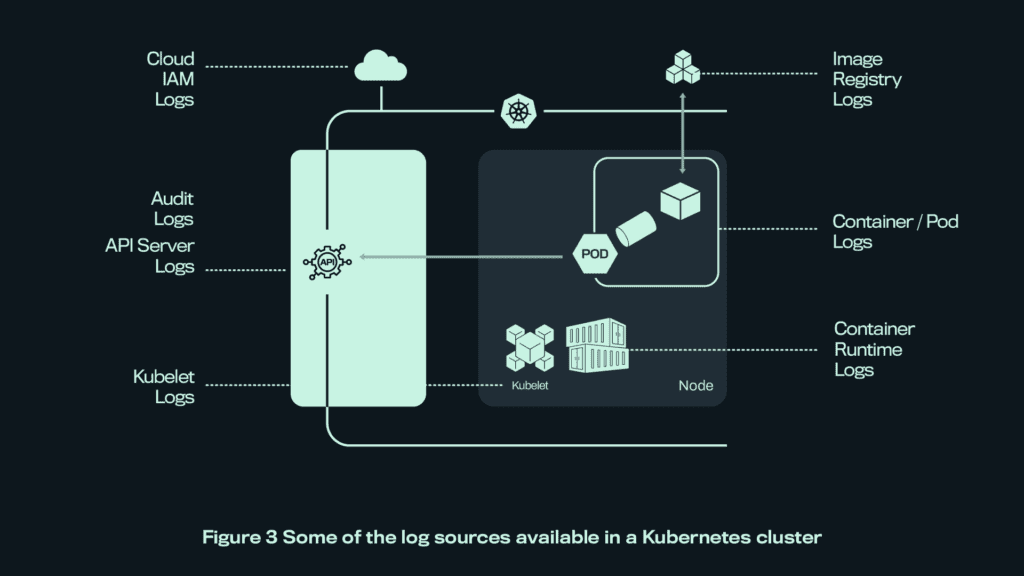
Logs are the cornerstone of security monitoring, and in Kubernetes too. This can be challenging in practice, however, due to the lack of an official, built-in, centralized logging solution (“cluster-level” logging). Users are responsible for setting up their own logging architecture to suit their needs. At the same time, there are many types of logs In a Kubernetes cluster, which can be broadly categorized into:

  1. Application/container logs capturing the output from the applications running in containers
  1. Kubernetes component logs, which are logs from core components like the API server and kubelet
  1. Logs from external sources, which are also crucial for the security of the ecosystem, such as cloud provider logs, if you’re using a cloud-managed Kubernetes service (e.g., IAM logs)

Naturally, not all these log sources are useful for detecting security threats. The rule of thumb is that those of security interest will be those answering the questions:

  • Who acted?
  • What did they do?
  • When and where from?

Kubernetes audit logs: The key to attack detection

From the various sources available, the API server’s Audit logs can be considered the most valuable source for security monitoring, as they record the interactions with the Kubernetes API server.

They can capture suspicious actions like unauthorized access or secret listings. They are not enabled by default, and administrators need to first define an audit policy, setting adjustable verbosity levels to each event or event class. Crafting the perfect policy for your cluster – one that provides the visibility necessary while balancing the noise generated– will be a continuous process requiring tuning and experimentation. By enabling audit logs and forwarding them to a centralized location, detection engineering teams can then proceed to write alert rules upon certain attack patterns in those logs. These building blocks enable creation and sharing of these “attack signatures” in a platform agnostic format such as Sigma rules.

As for the other attack surfaces in scope, visibility into container- and node-level activity can be achieved with tools like Falco, Hubble, and Tetragon. These solutions leverage the Linux kernel’s eBPF functionality, to monitor Kubernetes nodes, providing EDR-style alerting on platform events such as suspicious command execution or network connections etc.

Conclusion

In summary, attack simulations offer a proactive approach in building defenses, and this is no different in Kubernetes environments.

Once a good understanding of the threat model for the ecosystem in question is in place, blue and red teams can collaborate with the methods we described in this article, to build resilience and stay on top of new threats.

Now’s the time to get ahead of attacks!

Contact us to learn how we can help secure your Kubernetes environment.

Attack Path Mapping

Attack Path Mapping

Read more

Related content

Our thinking

Top 5 common misconfigurations in cloud environments – and how to avoid them

January 28, 2025
Top 5 common misconfigurations in cloud environments – and how to avoid them
Whitepapers

Microsoft Azure Security Framework

August 5, 2021
Microsoft Azure Security Framework
Our thinking

Private: Kubernetes network encapsulation: Identification and exploitation

September 2, 2024
Private: Kubernetes network encapsulation: Identification and exploitation

Red teaming – The Reversec guide to rainbow teaming

This whitepaper demonstrates how the practical and technical Red team delivery processes lead to real-world impact. For readers who have taken part in similar testing activities already, the paper will help explain how to boost the benefits of that pre-existing investment.

Driven by industry advancement in recent years, there is now a broader range of initiatives available to support the development of an organization’s cybersecurity posture across the Predict, Prevent, Detect, and Respond (PPDR) model. Combined, these are colloquially referred to as a “Rainbow Team”, delivering purple (collaborative), blue (defensive), red (offensive), and gold (crisis management) activities. When delivered sequentially and continuously, organizations gain the ability to utilize outputs from each development area and measure incremental improvement.

WHITEPAPER

The Reversec guide to rainbow teaming – Red team

Download

Related content

Our thinking

Do you need a red team?

January 14, 2023
Do you need a red team?
Our thinking

Red team diaries: Cyber

November 17, 2022
Red team diaries: Cyber
Our thinking

Red team diaries: Physical

November 14, 2022
Red team diaries: Physical

Purple teams with wings – Measuring detection efficacy in the cloud

Purple teaming is about collaboration that strengthens detection and response. By merging offensive and defensive strategies, purple teams help SOC analysts gain deeper insights into offensive tradecraft, understand how attacks manifest in their tools, and improve their detection responses.

As workloads move to the cloud, the challenge grows. In today’s rapidly evolving cloud environments, maintaining robust security is crucial. This whitepaper helps you understand what effective purple teaming looks like in modern environments and how to make it work for your organization.

Some years ago, we decided that our purple team exercises needed a cloud migration of their own, leading to the creation of our first cloud purple team in 2020. We designed the next generation of Attack Detection Capability Assessment (ADCA), a highly collaborative purple team exercise performed alongside a client’s detection and response personnel.

In this whitepaper, we share experiences from real-world engagements to explore how effective purple teaming can enhance your organization’s detection capabilities.

WHITEPAPER

Purple teams with wings: Measuring detection efficacy in the cloud

Download

Related content

Our thinking

Do you need a red team?

January 14, 2023
Do you need a red team?
Our thinking

Red team diaries: Cyber

November 17, 2022
Red team diaries: Cyber
Our thinking

Red team diaries: Physical

November 14, 2022
Red team diaries: Physical

A risk-based formula for security testing

Why do we need a new formula for testing?

The tools and processes used in modern system design and development are exponentially increasing the number of assets organizations must identify, manage, and secure. This is an opportunity to rethink the formula for security testing, so it addresses the real risk and impact of an attack, while being regulation compliant.

In this whitepaper, we’ll break down the process involved, explaining how to harden your operations and improve resilience by aligning security spend with real risk. The approach gives rationale to your testing program, both in defining which assets to prioritize for testing and how to test them…

WHITEPAPER

A risk-based formula for security testing

Download

Related content

Our thinking

What is Attack Path Mapping

April 17, 2024
What is Attack Path Mapping
Our thinking

Prompt injections could confuse AI-powered agents

May 17, 2024
Prompt injections could confuse AI-powered agents

What is Attack Path Mapping

Demystifying Attack Path Mapping

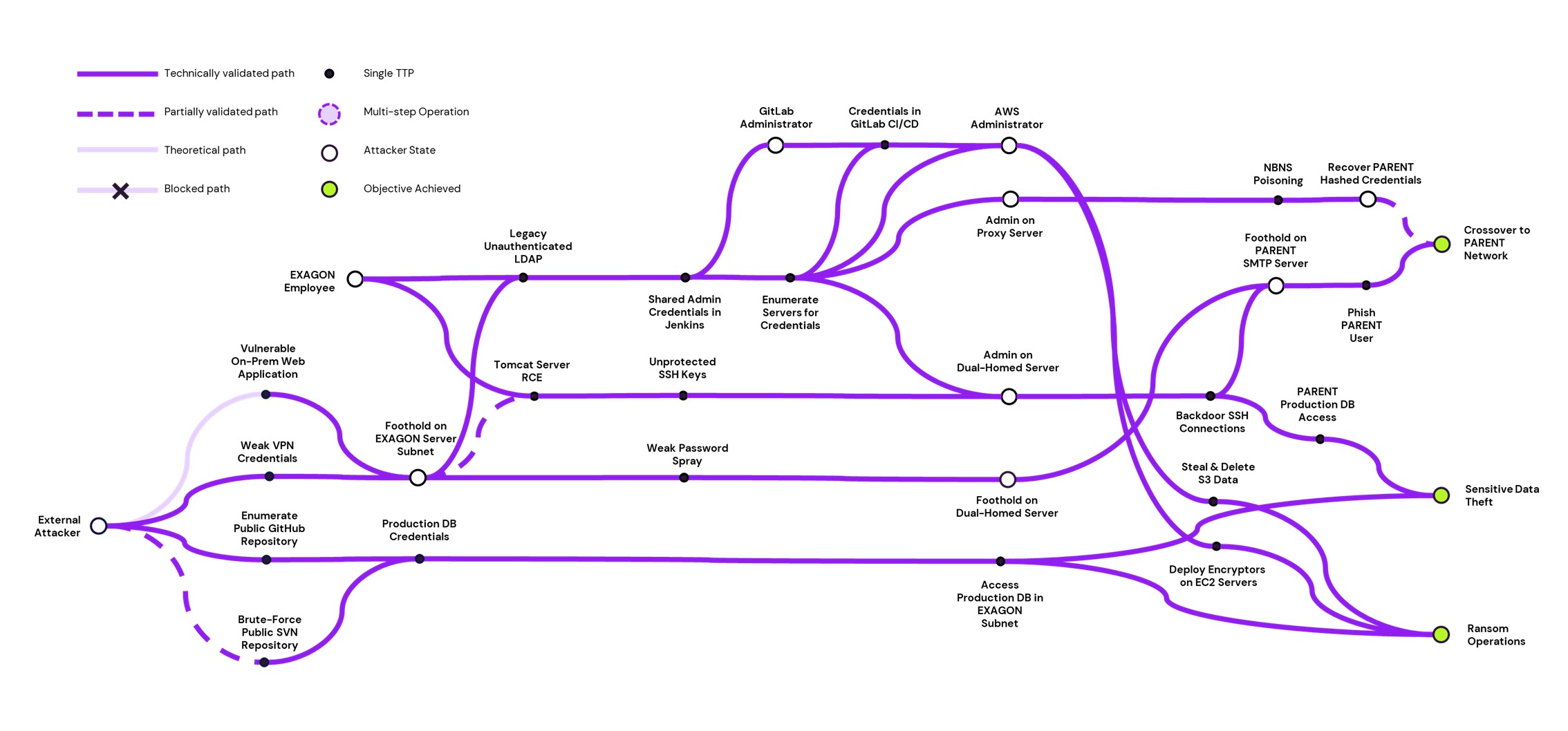
Staying ahead of potential threats for organizations requires a proactive approach. Cybersecurity professionals employ attack path mapping to understand, visualize, and mitigate potential attack vectors within a system or network. Regarding exposure management, APM helps shortlist the most critical findings out of hundreds or thousands of findings and thus reduces the company’s risk level.

At its core, attack path mapping involves the identification and analysis of potential routes that a cyber attacker could take to infiltrate a target system or network. These paths typically consist of a series of interconnected steps or vulnerabilities that, when exploited, enable unauthorized access or compromise of sensitive assets.

Figure 1: Example Attack Path map

The process of attack path mapping begins with thorough reconnaissance and enumeration, where security experts gather information about the target environment, including its infrastructure, applications, protocols, and potential vulnerabilities. This information is the foundation for constructing a comprehensive map of potential attack paths.

Key Benefits

Attack path mapping offers several key benefits in the realm of cyber security defense:

  • Risk Assessment: When performing a risk assessment, it’s important to do so in the context of your business, i.e., how critical is the asset for the company, and what is the possible impact? Organizations can assess the likelihood and impact of various cyber threats by visualizing potential attack paths. This allows them to prioritize security measures and allocate resources effectively to mitigate the most critical risks.
  • Vulnerability Identification: Attack Path Mapping helps uncover hidden vulnerabilities and weak points within a system or network architecture. By understanding how these vulnerabilities can be exploited in tandem, organizations can take proactive steps to remediate or patch them before malicious actors exploit them.
  • Incident Response Planning: With insights from attack path mapping, organizations can develop more effective incident response plans. By anticipating potential attack scenarios and their corresponding paths, security teams can respond swiftly and decisively to mitigate the impact of security breaches.
  • Compliance and Regulation: Many industry regulations and compliance standards require organizations to demonstrate a proactive approach to cybersecurity risk management. Attack Path Mapping provides a structured methodology for fulfilling these requirements by identifying and addressing potential security gaps.

Best practices

To effectively leverage Attack Path Mapping in their cybersecurity defense strategies, organizations can follow these best practices:

  • Continuous Monitoring: Cyber threats are constantly evolving, making continuous monitoring essential for staying ahead of potential risks. Regularly updating and revisiting attack path maps ensures organizations remain vigilant against emerging threats and vulnerabilities.
  • Collaboration and Communication: Attack Path Mapping is a collaborative effort that involves multiple stakeholders, including security analysts, network administrators, and business leaders. Effective communication and collaboration facilitate sharing insights, expertise, and resources necessary for comprehensive threat mitigation.
  • Automation and Tools: Automation tools can streamline the Attack Path Mapping process by aggregating and analyzing vast amounts of data more efficiently than manual methods. Investing in advanced threat intelligence platforms and network visualization tools can enhance the accuracy and effectiveness of Attack Path Mapping efforts.
  • Adaptability and Flexibility: Cyber attackers are adept at adapting their tactics to circumvent security measures, making it crucial for organizations to remain adaptable and flexible in their defense strategies. Regularly updating attack path maps and reassessing security controls ensures that defenses remain resilient against evolving threats.

The ability to anticipate, detect, and mitigate cyber threats is paramount in today’s interconnected digital landscape. Attack Path Mapping provides organizations with a proactive framework for understanding and addressing potential security risks, enabling them to fortify their defenses against increasingly sophisticated cyber attacks.

By embracing attack path mapping as a core component of their cybersecurity strategy, organizations can enhance their resilience and safeguard their critical assets in the face of evolving threats.

Related content

Our thinking

Do you need a red team?

January 14, 2023
Do you need a red team?
Our thinking

Red team diaries: Cyber

November 17, 2022
Red team diaries: Cyber
Our thinking

Red team diaries: Physical

November 14, 2022
Red team diaries: Physical

Do you need a red team?

What is the point of a red team?

It’s pretty common for people to ask us for a red team engagement to understand if their organization can be breached.

Well, every organization can be breached – you don’t need an expensive red team to prove that.

Okay, point taken, the client might say. What we actually want to know is how an attacker might breach us.

Excellent. You still don’t need a red team. A red team will always take the path of least resistance and will stop the engagement when they reach a predefined point. You won’t get all the information you need from a red team; a purple team might be better.

At this point, there’s often a bit of a confusion. After all, we’re a cybersecurity company; shouldn’t we want to sell you a red team? Actually, no: we don’t want our clients to waste their money. We want to have an honest discussion and only sell you services that will help solve your problems.

Here are some of the things we look for when we are considering selling a red team service.

Four key reasons to get a red team

1. You want a stress test

If you want to find out if you are fit, play a game of squash with an experienced player. It’s not about winning: it’s about trying to keep up with the pace.

If you feel like your blue team is ready, you might want to use a red team as a general stress test. If you know your blue team isn’t match fit yet, proceed with caution.

2. The red team isn’t the first test you’ve done

We usually recommend that you pen test individual systems and the corporate network before considering a red team. You should also have a solid strategy around detection and response, including tooling that is already in use, in place.

3. You have a decent threat model

You should know what your highest-value assets are and have a record of likely threats you might encounter, accounting for the type of organization and the industry you operate in.

4. You have budget

You need to have a reasonable budget for a red team, not only because a thorough engagement takes up a lot of consultant time (often 60+ consultant days), but because if you are stretching your budgets to breaking point to pay for a red team, there are probably more valuable things you could buy for the same money. For example, a smaller organization looking to spend money on cybersecurity may be better served by purchasing a year’s worth of managed detection and response if they don’t already use it.

Other good reasons for wanting a red team

Convincing others that you are ready for an engagement, or that you need more investment in security

Experienced regulators and CISOs know that red teams will always breach the organization’s defenses. To assess the strength of a blue team, they look for good detection rates.

A red team engagement is an unequivocal test of a blue team’s capability, much more indisputable than a purple team, for example, and so they can be useful for proving to various stakeholders that the organization is ‘match ready’.

Alternatively, you could take the riskier move of using a red team to demonstrate that the organization is not secure, hoping that this might result in increased investment in security services and resources. The people to be convinced aren’t necessarily sitting around the board room table—they might be internal development teams or a group of particularly confident Cloud architects who think they’ve built something really robust.

Overcoming stage fright

Imagine you’re a new SOC analyst, sitting in a room with screens everywhere, surrounded by people. Suddenly you get an alert: the organization is under attack.

SOC analysts in this position can get very real stage fright. They have trained for three years or so, and suddenly an attack is underway and it’s their job to stop it. They could lose their job if they get it wrong. Everyone else in the room is panicking as their systems crash.

Red teaming is a way to let these SOC analysts rehearse. Practicing their response in a setting that feels real, but that is actually controlled behind the scenes, is somewhat like training firefighters in real burning buildings.

Summary

Everyone wants a red team, but very few organizations need one. Some members of our Sales team at Reversec have estimated that more than half of the red-team enquiries they get eventually turn into discussions about other, more effective (and less costly) engagements for the customer once the client had explained their needs.

This is because red teams, although valuable in some contexts, are not right for everyone. Remember, the real benefits of a red team are not about learning whether and how an attacker could breach your organization; red teaming is about assessing and improving defense, detection and response capabilities, and educating the blue team so that they can operate more effectively in the future.

For more

For detailed insights into red teaming, as well as other solutions like purple teaming and attack path mapping, please visit our service pages.

Related content

Our thinking

Red team diaries: Cyber

November 17, 2022
Red team diaries: Cyber
Whitepapers

Red teaming – The Reversec guide to rainbow teaming

June 29, 2024
Red teaming – The Reversec guide to rainbow teaming
Our thinking

Red team diaries: Physical

November 14, 2022
Red team diaries: Physical

Red team diaries: Post-engagement

SE01 E03 (To protect the identities of those involved, this article is a dramatization of events taken from a mixture of engagements.)

I’m a red teamer, hired to help my clients understand their own readiness to prevent, detect, and respond to targeted attacks focused on cyber attacks, physical attacks or both. Over the last three days I had broken into my client’s office, stolen a laptop, and penetrated their environment to steal valuable intellectual property.

Wrapping up

My team reconvened on Monday for a short post-mortem. We discussed the tactics, techniques, and procedures that we used and why we used them. We reflected on the indicators of compromise that the client’s security team could have been monitoring for. These, we hypothesized, could have stopped the attack progressing or at least would have given away some aspects of the attack that would have allowed detection by the defenders (otherwise called the blue team). However detection is only the first step; knowing what to do, as well as when and how to do it, is a crucial part of containing a targeted attack and limiting its impact.

Our recommendations were pragmatic and empathetic. We aimed to provide short- and long-term defensive measures that would buy the client time to tackle the deeper root causes and potential mitigation paths for detecting and containing similar attacks. We made sure to discuss the potential impacts of the proposed changes on the day-to-day use of IT systems and the company culture; cybersecurity is about people and the processes they follow as much as it is about technology.

Results workshop

The following day, I sat at a large glass table with the client’s white and blue teams (who were in charge of refereeing the engagement and defending the environment, respectively). Another red teamer had joined me to provide additional thoughts on the outcome of the test. Although I was excited to share the findings of the engagement, I understood the gravity with which they would reach the ears of the attendees.

Walking through the attack scenarios in detail, I explained every technical action and decision, inviting questions as I went.

The client asked some good questions, including some that we get in almost every workshop. They asked:

  • How did we perform compared to other organizations in our sector?
  • What was your plan B if your techniques had not worked?
  • Where do you think our strengths lie?
  • What did we do defensively that slowed you down or made you concerned about being detected?
  • What would you choose as your primary target if you were to run another engagement?
  • Are our physical security and network security teams collaborating?
  • Is our cybersecurity department collaborating with our network department?
  • Are our third-party products increasing our risk?
  • Did our security products stop you or slow you down?
  • Did you notice a security culture or a sense of shared responsibility among our colleagues?

I answered these questions fully while describing my general approach to the attack narrative, including the attack paths I took, the obstacles I observed and how they were circumvented, and how each attack was performed and structured.

This was followed by a deep-dive analysis of the attacks I’d prepared but not attempted (and thus could be input for a follow-up simulation or remediation project, should there be a risk of exploitation). I presented my analysis of the client’s security posture and awareness, as well as observations of the actions taken by the blue team around detection, containment, and the time frames in which responses were received.

A strong overall security posture is one in which security controls are working with each other and not against each other. We look for a culture of security, where best practices are considered and defensive actions are based on accurate information and well-defined priorities.

Finally, we gave an overview of remaining attack artefacts, including what data was accessed and where, how the data was kept safe and secure during and after the test, and how the anonymity of individual employees or departments had been upheld.

Some of the findings we discussed immediately gained traction, and several good ideas were put forward as solutions to the problems we had identified, including:

  • Removing the availability of certain services and ensuring they can only be used after a VPN connection had been established on internal networks as well as internet facing hosts and services
  • Ensuring that successful access attempts are logged and acted upon as much as unsuccessful ones
  • Setting up network security controls inside the building in a way where a breach is assumed and where your physical location (such as meeting rooms, the CEO’s office, or the IT administrators’ department) does not automatically dictate your network or application privileges
  • Enabling multi-factor authentication for internal and relevant services
  • Ensuring that application servers and virtualization services are segregated as much as possible based on risk and threat modelling.

Some of our other findings, however, were less well received. Some post-engagement briefings can involve heated conversations, especially when there is political tension within the client organization. It’s not every day you experience a targeted attack simulation that shows just how disastrous a real attack can be. But ultimately, it’s my job to align the room behind a common goal, because improving the client’s security posture is always a team effort.

The workshop became increasingly collaborative as we progressed, with everyone at the table talking through the indicators of compromise that could have been identified, what measures could be built for future detection, and where the client could create additional strategic detection choke points to obtain greater transparency across network activity.

Red teamer job satisfaction comes from everyone learning from each other, where everyone’s daily work and lives become a little bit easier, and when everyone can focus on relevant threats and what it takes to reduce risk while helping the organization grow.

My timeline of events was compared with the client’s, and all measures and tactics were debated in the context of the organization’s risk appetite, technical roadmap, and upcoming developments in the business.

Final thoughts

Whatever a client expects from the results, the outcome of a red team engagement is never ‘pass’ or ‘fail’. It’s a stress test designed to highlight how much control is really present across the organization and how fast a targeted attack can be detected and contained, and the attacker eradicated. The only way to really understand your own security posture is to perform these stress tests regularly so that you can compare your results over time.

Red teaming provides a unique opportunity to test critical assets in production, as well as how well security controls, training and processes can work together to defend your business so that a breach, downtime or ransomware attack can ultimately be just another Tuesday and not a newspaper headline with long term impact. 

Related content

Our thinking

Do you need a red team?

January 14, 2023
Do you need a red team?
Our thinking

Red team diaries: Cyber

November 17, 2022
Red team diaries: Cyber
Our thinking

Red team diaries: Physical

November 14, 2022
Red team diaries: Physical

Red team diaries: Cyber

SE01 E02 (To protect the identities of those involved, this article is a dramatization of events taken from a mixture of engagements.)

Checking-in

I had just stolen two laptops from my client’s office. After days of research and surveillance, I had made it past their physical security with relative ease. My next task was to tell the client about the breach.

I am a red-teamer, hired to test clients’ readiness to prevent, detect, and respond to targeted cyber attacks. Stealing those laptops was phase one of my work; the physical prelude to the true test of cyber security.

My client wanted to understand the severity of the risk should a malicious actor acquire one of their laptops. They were not only worried about laptops being stolen, but also about laptops being lost in public places like trains and taxis (which happens roughly as often as true thefts).

Phase one had gone well. I updated the client’s “white team” (the internal stakeholders refereeing the engagement) over the agreed encrypted channel. This is a critical part of the red team service, which is all about collaboration, communication, and education. A red team engagement needs to be an authentic test, but it should never be unsafe or add risk to the business. I always contact white teams regularly and at a frequency they are happy with.

I was about to start phase two: penetrating the client’s computer network to steal their high-value trading algorithms and workflows.

The laptop whisperer

Double shot black coffee. Really black. So black, light cannot escape the cup. This is the best way to start.

Encryption

Back in my own office, I flipped the contractor’s laptop upside down and opened the back to get to the Trusted Platform Module (TPM) chip.

Many organizations use full disk encryption to secure their devices. This is a good move, but users are often lazy—they prefer to skip the authentication step that make this setup secure.

When an encrypted computer equipped with a TPM chip starts, the BIOS chip in the computer asks the TPM chip “got a decryption key for me?” and the TPM chip complies and sends the key.

Users should be required to put in a PIN or password before the key is sent from the TPM chip to the BIOS chip. However, companies will often disable that requirement because employees will complain if they have to punch in a PIN every time they start the computer. This lack of authentication is a golden ticket for attackers.

If you look in the right places on the laptop’s circuitry, you can eavesdrop on the communication of the TPM chip transmitting the decryption key across the motherboard. All you need is the right equipment.

I used a USB device, a ‘logic sniffer’, the size of a credit card. It records activity passing between the BIOS chip and the TPM chip on the motherboard. After the eavesdropping device located the key, I disconnected it and began the recovery process using software written by one of my colleagues.

Backdoor

My next priority was to install a backdoor on the main machine so that I would still be able to access it, even if someone restarted the computer, ran software updates, or changed the password. This is known as maintaining persistence. This backdoor would work the moment the laptop was powered on and connected to the client’s VPN infrastructure.

Administrator

I already knew that the client’s remote workers were automatically connected to the VPN when logging on to their device, so I launched my own custom code that I had hidden inside a common tool that runs at startup to piggy-back onto the VPN connection, which allowed me to connect with the client’s main corporate network.

As far as the laptop was concerned, I was the HR contractor from whom I had stolen the laptop. A bit more than that, actually: with my full, backdoored access and the laptop in my possession, I’d achieved administrator-level access to the laptop’s hard drive. Despite this, without the user’s main password (which was stored in Active Directory), I could not reach my objective in the virtualized application environment that housed the client’s critical intellectual property.

Password

After some searching and another coffee, I found a local HR application that I suspected the original owner of the laptop would have used regularly. I was right, and he had even saved his password to autofill. He seemed like the type to reuse passwords across applications, so I thought that, if I could recover it, this one could be used to unlock multiple accounts.

There’s a small window of time during which applications process passwords in a readable format. For an attacker in possession of a victim’s device, this is an opportunity to snatch the information without brute force.

I loaded the HR application on a second computer so that I could work with my own virtualized setup, including certain useful programs and files. As soon as the HR application tried to read the cached password and decode it in memory, I paused the process, freezing the flow of data.

The decoded password was now somewhere in the HR application memory space; all I had to do was find it. I made a copy of the working memory and saved it to file. The client had a legacy 8-character password policy, so I sieved through the data, concentrating on any line of data that was 8 characters or more. In minutes, I saw it: Superm4n.

I could see dozens of applications through the virtualized application environment. After a few attempts, I logged into one with the password, then broke out of the virtualized environment onto the underlying operating system.

Recommendation

Passphrases that are long and unique are much more secure than shorter passwords that are artificially complex (such as by having capital letters and symbols). A passphrase like ’medievalstrawberryatthemovies’ is uncrackable (so long as the words in the phrase are chosen randomly).

Another benefit is that passphrases like this do not have to be rotated every three months, which means that users do not have to remember new passwords every few months (which can result in them writing passwords down or storing them somewhere on their device).

DLL side-loading

After a night’s rest, I returned to work. I was under the proverbial floorboards of the virtualized environment; I could see which applications were being used, as well as by whom and from where. Employees were busy at work across different regions and time zones, all accessing different applications. I didn’t have Active Directory privileges to access the restricted network housing those critical assets, so I needed to use lateral movement and pivot to another account that did have access.

Software is modular; it relies on different software libraries to perform tasks. A risk arises when applications start looking for external files in locations that the end-user and thus also an attacker can access and change. If an attacker controls the location where these files are stored, they can respond to this request, presenting whatever file the application is expecting alongside malicious code. This type of attack is known as DLL side-loading. The attacker places a spoofed malicious DLL file in a common directory that usually contains system libraries. This triggers the operating system to load the attacker’s file instead of the legitimate one.

Recommendation

To defend against DDL Side-loading, limit end-user write privileges to the relevant folders and have detection and response for directories where the end-user (and thus a would-be attacker) would be trying to manipulate files or introduce new files

Looking across the system, I found six users with access to applications that stored their temporary files in a location that my account could also access. All six could be abused using DLL side-loading. I sprinkled back-doored software libraries in the target locations and, eventually, a file request came through from one user. Now I also have access to that person’s user account and all the files, privileges and access they have access to.

Bullseye

I stole a password from the memory of a local business application, re-used it against the virtualized environment, and broke out of a sandbox application to obtain the access needed to reach the target network. I back-doored a number of utilities in use by the trading team and basically had the trading team open the door with the access needed to get to the file shares holding the trading algorithms.

One of my colleagues passed by my desk, leaving for the day. He asked me if I had found a way in.

“In, out, and everything in between,” I said, smiling.

Final actions

I’d been at my desk for around 48 hours. The finish line was in sight, but I didn’t cross it. First, I had to list the files and other assets I had access to and take screenshots of my privileges to prove to the client that we had reached the critical post-exploitation stage of the attack. I also exfiltrated example source code files and selected copies of the development environment and its key assets, but only after checking in with the customer and proving that I had access and control, and vetting the files for exfiltration so as to not introduce any unnecessary risk.

In a second browser window I notified the white team of the engagement status: complete, objective achieved. It was time to make another ultra-black coffee before writing the client’s report; I wanted to start when the engagement was still fresh in my mind. The report contained an executive summary of the engagement and including the results as far as observations and risk, the technical details of the attack narrative, as well as detailed mitigation paths and suggestions for additional controls to ensure that next time things are a little bit harder and new processes and infrastructure can be tested.

The rest of my team had dispersed for the weekend. The office was silent. All the motion-activated lights were off, except the ones above my desk.

Read the next installment of this Red Team series ‘Episode 3 – Post engagement’ here.

Related content

Our thinking

Red team diaries: Physical

November 14, 2022
Red team diaries: Physical
Our thinking

Red team diaries: Post-engagement

November 17, 2022
Red team diaries: Post-engagement
Our thinking

Do you need a red team?

January 14, 2023
Do you need a red team?

Red team diaries: Physical

SE01 E01 (To protect the identities of those involved, this article is a dramatization of events taken from a mixture of engagements.)

The mark

Somewhere in Europe, the clock strikes five. It’s raining hard, and an HR consultant has finished work for the day at his client’s office. He carefully tidies the desk he’s been using, then wishes the few other workers present a good weekend. He takes his client-loaned laptop to a small IT room adjacent to the main lobby, using a temporary key card to enter. He closes the door and, after dropping the key card into a mailbox in the lobby, is ready to leave.

Freezing rain hammers on the lobby windows. The contractor holds the glass door open with his foot, trying to open his umbrella without getting his suit wet.

“Let me get that for you,” a voice says from the other side of the umbrella. It’s a man, dressed quite casually, who leans in to hold the door. “And have a nice weekend.”

The man pulls the door fully open, smiles, and brushes past into the lobby. The contractor smiles back automatically, barely registering the interaction, and walks towards his car, his mind already on dinner and the weekend ahead.

The red teamer

It can happen to anyone. I’d been shadowing the contractor going in and out for weeks. I knew exactly when he would be leaving. I’d also phoned the reception desk to ask whether I could have a parcel delivered there. I’d asked who would be there to receive it and when I could come to pick it up. More important, when couldn’t I come to pick it up? When was the lobby unstaffed?

I had one goal: to break through the client’s physical security, acquire a laptop, and penetrate the restricted network to access high-value intellectual property.

My name is Tom, and I’m a red teamer. I test clients’ readiness to prevent, detect, and respond to cyber attacks. A red teamer is like a boxer wearing pillows on their hands instead of gloves; red teamers simulate an attack without doing any damage, but with the same stakes. This helps clients to find and fix the gaps in their defenses so that they are ready when they are attacked for real.

This story is about my work with a financial entity, which owns custom-developed trading algorithms and workflows designed to predict trends in certain markets. In the hands of a financially-motivated adversary, this intellectual property could potentially make millions and competing organizations could save years in research and development.

So, that Friday afternoon I was sitting in my car, packing my laptop bag with the compact toolkits I needed for the physical break-in. The HR contractor left dead on time every Friday—sometimes, routine is the enemy. Around 16:55, I locked up and approached the building, walking slowly until I saw him through the glass doors. The moment he stopped to open his umbrella, I knew I was in.

The intruder

With my laptop bag hanging from my shoulder, I walked directly to the key card mailbox. It was the kind available from any standard retailer, making replica keys easy to obtain. I hadn’t bothered to find one though: I could open those simple locks on my own.

I turned my back to the CCTV cameras, making sure my hands were out of view, and slipped a lock-picking tool, a jiggler key, into the lock. I moved it gently. The mailbox opened.

The mailbox was full of access cards that had not yet been deactivated for the day. I slid them into my inside jacket pocket and walked to the IT room that I had seen the HR contractor accessing. The first key card I took out of my pocket unlocked the door.

The HR contractor had left his laptop on the closest table. I felt a pang of excitement. I already knew exactly what laptop models the organization used; I had seen them front and center in corporate videos and under the arms of the workers moving through the building’s lobby. Over the last few days I had researched the potential weaknesses those models have. It pays to be prepared.

Organizations cannot hide all this information, but they should understand how attackers may use it to enable their actions.

The HR contractor’s laptop went into my bag, along with a second, different model (just in case). I left the room, posted the stolen key cards back into the mailbox to avoid raising an alarm, and strolled from the building. Easy.

Read the next installment of this Red Team series ‘Episode 2 – Cyber’ here.

Related content

Our thinking

Do you need a red team?

January 14, 2023
Do you need a red team?
Our thinking

Red team diaries: Post-engagement

November 17, 2022
Red team diaries: Post-engagement
Our thinking

Red team diaries: Cyber

November 17, 2022
Red team diaries: Cyber