






Generative AI Security
Protect your GenAI-powered applications and solutions with diverse generative AI security services
Secure your LLMs and GenAI
Generative AI is transforming how organisations build products, deliver services, and improve productivity. As AI adoption accelerates, managing generative AI security risks becomes just as important as capturing the benefits.
Most risks stem from how generative AI models integrate into systems and workflows, not from the models themselves.
Overlooking these risks can expose your organization and customers to data breaches, unauthorized access, and compliance issues, including the exposure of confidential information and personal data held within your systems.
Our consultants can help you find and address cyber risks throughout the GenAI integration process. From planning to deployment, we’re there every step of the way.
We support secure adoption by assessing potential flaws in GenAI integrations and their interaction with your systems and workflows. We also provide recommendations for secure AI deployment.
Depending on your use case, the different assessment approaches may include any of the below. Contact us to discuss the best approach for your specific case.

Governance, risk and threat modeling for AI
Services to support you in the planning phase.

AI Governance
Defining the AI adoption objectives and acceptable use cases.
Adapting or creating ad-hoc risk management frameworks based on your organization’s needs and regulatory requirements.
AI Risk Modeling
Identifying and prioritizing generative AI security risks at an organizational and use case level.
Creating a shared risk understanding between AI development teams, security teams and business units.
AI Threat Modeling
Identifying the most relevant attack paths based on risk prioritization and technical analysis.
Identifying control gaps and prioritizing control implementations through cost/ benefit analysis.
Implementation and integration of AI solutions
Services to support you in the implementation phase.
Pentesting LLM Applications
Identifying and addressing the cybersecurity weaknesses in your organization’s large language model (LLM) applications and integrations.
We map exploitable vulnerabilities in your LLM applications, including the specific cyber risks they introduce and the attacker goals most likely to make them a target.
Pentesting AI-supporting Infrastructure
Identifying high-risk attack paths leading to your AI-powered applications and offering recommendations to protect these.
Ensuring secure hosting and AI management, protecting AI data and access points.
Common pitfalls in generative AI security
Generative AI introduces a distinct category of risk, one shaped by how the technology is applied within an organization, not by the models in isolation. When building GenAI and LLM integrations, the security risks of generative AI need to be considered from the start, with strong safeguards built in before deployment.
Generative AI systems can expand attack surfaces significantly, particularly when connected to training datasets, internal tools, or external APIs without adequate controls. Shadow AI, where employees adopt generative AI applications without security teams’ knowledge or oversight, compounds these challenges further.
Below are the most common security pitfalls we see when businesses adopt AI.

Jailbreak and prompt injection attacks
Attackers attempt to jailbreak an LLM by injecting carefully crafted prompts, tricking it into executing unauthorized actions or revealing sensitive information.
Excessive agency and
malicious intent
GenAI systems with excessive agency can be manipulated by attackers via jailbreak and prompt injection attacks causing the system to execute malicious actions and posing significant security risks.
Insecure tool/
plugin design
Poorly designed or insecurely implemented tools, plugins, or LLM integrations introduce vulnerabilities that attackers can exploit to gain unauthorized access or exfiltrate data.
Insufficient monitoring, logging, and rate limiting
Weak monitoring, logging, and rate-limiting mechanisms hinder threat detection, making it harder to identify and respond to security incidents promptly.
Lack of
output validation
Without proper validation and sanitization of generative AI model outputs, organizations risk exposing confidential information or introducing client-side vulnerabilities such as Cross-Site Scripting (XSS).
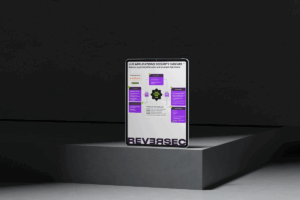
LLM applications security canvas
Our LLM Application Security Canvas captures our battle-tested approach to deploying LLM applications to production securely. It implements security controls across every stage of the pipeline.
Download the LLM Application Security Canvas now.
Spikee: Open‑source LLM application security testing
As organizations embed LLM agents into workflows, prompt injections pose an increasing risk to systems. To address gaps left by existing approaches to generative AI security, we developed Spikee, one of the generative AI security tools built specifically for the threats LLM integrations introduce in cybersecurity.
Spikee is our open‑source tool for LLM application security testing. It is specifically designed for assessing real cybersecurity threats such as data exfiltration, cross‑site scripting (XSS), and resource exhaustion.
The tool includes modifiable attack scripts, systematic evaluation of guardrails, and support for both local inference and API‑based targets.

Our AI research

Our accreditations and certificates








Don’t be a stranger, let’s get in touch.
Whether you’re facing a cybersecurity challenge or simply looking for advice, we’re here to help. Fill out the form and one of our experts will get back to you as soon as possible.
This site is protected by reCAPTCHA and the Google
Privacy Policy and Terms of Service apply.